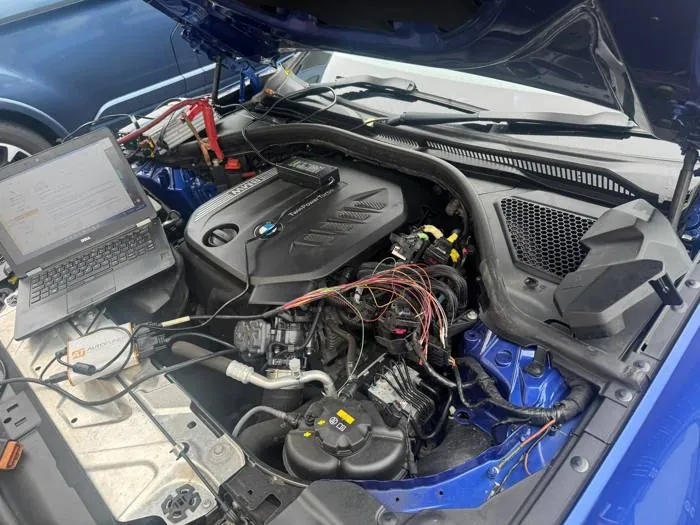
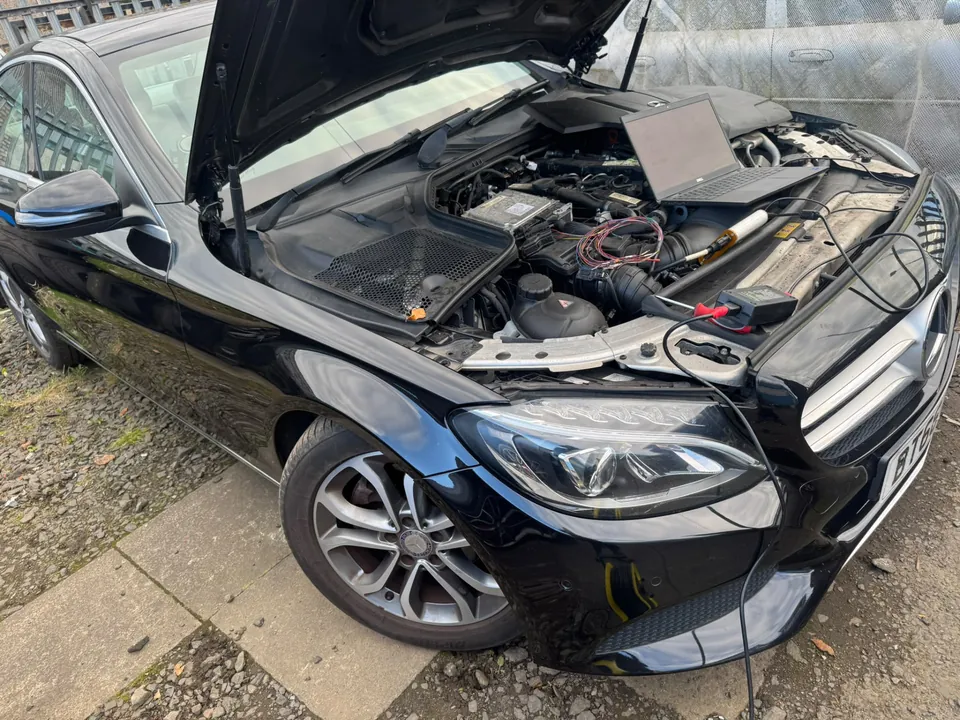
ECU remapping on a Mercedes C-Class with a laptop connected, by CML Autoworx in Lanarkshire

Stage 1 RemapSpecialists in Motherwell

Make everyday performance easier to use where your standard vehicle is suitable, with a straightforward discussion before you commit to any changes.

Get my quote

10 years' experience · 30-day money-back guarantee

10 YEARS

industry experience

30 DAYS

money-back guarantee

FROM £150

clear price up front

Mobile

we come to you

The service

A considered first step into tuning

A Stage 1 remap generally means adjusting engine calibration for a vehicle on standard supporting hardware. It is not a universal specification or a promise that every engine has the same spare capacity. The useful starting point is your vehicle’s condition and the difference you want to feel during ordinary driving.

CML Autoworx Ltd provides custom-written map files loaded with fully licensed tuning tools. Owner Nicky Lambert has 10 years’ industry experience. Rather than choosing a tune by a label alone, discuss your engine, gearbox, mileage, maintenance history and usual journeys so the proposed approach reflects the vehicle in front of you.

The service is mainly mobile at your home or workplace across Lanarkshire, Glasgow and parts of Edinburgh, subject to suitability. There is also a workshop at Park Road, Motherwell, ML1 4UH. Cars, vans, 4x4s and motorhomes can be discussed, although availability and likely outcomes depend on the specific vehicle.

Remaps start from £150, varying with the vehicle, requirements and location. CML Autoworx has motor trade and public liability insurance and offers a 30-day money-back guarantee. Call 07710 135604 for a vehicle-specific conversation before making plans around an appointment.
If it's left

Does your standard vehicle suit a different calibration?

A useful Stage 1 discussion separates characteristics you would like to change from symptoms that need diagnosis. Software should not become an excuse to overlook maintenance or worn components.

Useful response feels limited

You may find the engine needs more deliberate input than you would like during normal driving. Depending on the engine, a different torque delivery may improve that experience. Describe the situation clearly rather than treating every delayed response as evidence that remapping is needed.

Frequent gear changes interrupt progress

Some drivers want a broader usable operating range rather than higher maximum performance. Whether that is realistic depends on the engine and transmission. A calibration cannot remove the need to select an appropriate gear or make a struggling engine suitable for heavy loading.

You want to retain standard hardware

Stage 1 is generally associated with standard supporting components, making it a logical subject to discuss before hardware upgrades. It still involves modifying the vehicle. Suitability, insurer disclosure and any warranty or finance implications need consideration before software is changed.

Fuel use is a concern

A more usable torque delivery may support economical driving in some circumstances. It does not guarantee lower consumption. Short journeys, traffic, loading and using additional performance all affect the result, so discuss your actual routes rather than relying on another owner’s figures.

Common mistakes

  • Treating Stage 1 as a fixed industry standard can lead to poor comparisons. Ask what the proposed calibration means for your exact engine and transmission, not simply what stage name appears on an advert.
  • Ignoring clutch slip, warning lights or overdue maintenance increases the risk of an unsatisfactory result. A tune should follow a sensible assessment of condition, not replace needed repairs.
  • Assuming identical engine badges mean identical tuning potential overlooks hardware, software and transmission variations. Share accurate vehicle details and known changes before seeking a quote.
  • Expecting a remap to guarantee fuel savings encourages unrealistic budgeting. Compare like-for-like journeys and driving behaviour if you later assess consumption, and remember extra performance can require extra fuel.

Our process

How the job runs

  1. 1

    Explain what you want to change

    Contact Nicky with the vehicle details and describe your driving. Say whether the priority is response, relaxed progress or another practical outcome. Mention previous tuning, existing modifications and symptoms, even if they seem unrelated to the change you are considering.

  2. 2

    Discuss standard-hardware suitability

    Consider the engine, transmission and maintenance picture before deciding that Stage 1 is the right route. Known faults should be addressed appropriately. A standard vehicle is not automatically a healthy vehicle, and a familiar model name does not establish safe calibration limits.

  3. 3

    Agree the work and appointment

    Confirm the price, location and expected arrangements. Mobile work may suit your home or workplace, depending on the vehicle and setting. Ask about appointment length, preparation and the guarantee so there are no assumptions about what the booking includes.

  4. 4

    Load the custom-written calibration

    The map file is custom-written for the vehicle and loaded with fully licensed tuning tools. The method depends on the control unit. The agreed objective should guide the work rather than a generic demand for the largest possible advertised increase.

  5. 5

    Keep expectations and maintenance aligned

    Discuss how the vehicle should be used and what to do if you have questions afterwards. Continue appropriate servicing, inform your insurer and keep records of the modification. Assess changes in ordinary driving rather than attempting unsafe performance comparisons on public roads.

What you get

The benefits

Quicker access to usable performance

Where there is suitable scope, a revised delivery can make normal acceleration feel more readily available. This is about accessible response, not a guaranteed sprint time or permission to take smaller gaps in traffic.

Decisions that respect operating limits

Considering transmission and engine condition helps avoid treating every standard vehicle alike. Safe driving still requires judgement, sound tyres and brakes, and suitable road conditions. Extra response does not create extra stopping distance in your favour.

A realistic view of component life

A restrained request and good maintenance make more sense for long-term use than chasing the biggest figure. Added load can still accelerate wear, so longevity remains a consideration rather than a promised benefit of tuning.

Potential savings without compulsory upgrades

A suitable Stage 1 approach generally avoids requiring supporting hardware changes. Some drivers may also see improved fuel use, but neither fuel savings nor an absence of future maintenance costs can be guaranteed for an individual vehicle.

Everyday priorities over peak figures

A vehicle-specific brief can focus on usable behaviour across the journeys you actually make. Sharing symptoms and service history helps distinguish a tuning request from a reliability problem that needs mechanical attention first.

Clear terms before a modification

The 30-day money-back guarantee and a clear discussion of scope provide reassurance when deciding. Motor trade and public liability insurance are in place. Ask about the guarantee terms and your own insurance obligations before authorising the work.

In detail

Understanding Stage 1 beyond the label

Stage terminology is a convenient starting point, but the vehicle’s hardware and intended use matter more. These distinctions help you compare options without assuming all standard cars, vans or engines respond alike.

What changes and what stays standard

Engine management coordinates several operating functions. Depending on the engine, calibration changes may involve torque requests, fuelling, boost control or other relevant settings. Not every function applies to every vehicle, and more aggressive settings are not automatically more appropriate.

The usual Stage 1 intention is to work with standard supporting hardware. It does not certify the condition of that hardware. A worn clutch, cooling concern or existing running fault can change the suitability discussion even where no physical modifications have been made.

Petrol and diesel expectations differ

A turbocharged engine and a naturally aspirated engine do not offer identical opportunities through software alone. Diesel and petrol engines also deliver torque differently. Avoid using a result quoted for another engine family as a reliable prediction for your own.

Transmission differences matter too. A manual clutch and an automatic gearbox each have their own operating constraints. Tell Nicky which transmission is fitted and describe any unusual behaviour so the requested engine characteristics can be discussed in context.

Cars, working vans and touring vehicles

A car mainly used for commuting may benefit most from a more agreeable response in everyday conditions. A van carrying equipment may place greater importance on predictable delivery under load. Neither use case justifies overlooking servicing or exceeding legal loading limits.

Motorhomes and 4x4s can spend more time carrying weight or climbing gradients. Describe that use before discussing additional torque. A remap does not increase permitted weights, towing ratings or braking capability, and these limits remain separate from how strong the engine feels.

Private ownership and commercial responsibility

For private owners, insurer notification and possible warranty implications deserve attention before booking. If the vehicle is leased or financed, check the relevant agreement and permission requirements. Owning the driving experience does not necessarily mean you are free to modify the vehicle.

For businesses, make sure the person authorising the work has the authority to do so. Consider driver behaviour, servicing and how you will assess any fuel-use change. A useful commercial decision is based on operating conditions, not an assumed saving that has not been demonstrated.

FAQ

Stage 1 Remap questions

What does a Stage 1 remap cost?

Remaps start from £150, with the quote depending on your vehicle, requirements and location. Provide the engine and transmission details for a relevant price. Cash, card and bank transfer are accepted. Do not assume an advertised starting price applies unchanged to every Stage 1 enquiry.

How long does Stage 1 tuning take?

The time depends on the vehicle, programming method and the agreed work. Ask for an estimate when booking and mention any deadline. No single appointment duration applies to every control unit, and it is better to allow suitable time than plan around an unsupported quick turnaround.

Is Stage 1 just a generic file?

At CML Autoworx every map file is custom-written for the vehicle and loaded using fully licensed tuning tools. Discuss your driving priorities, condition and modifications before work is agreed. A custom file does not remove the physical limits of the engine or transmission.

What guarantee comes with the remap?

CML Autoworx offers a 30-day money-back guarantee. Ask how it works, what terms apply and how to raise a concern. It should not be interpreted as a promise that mechanical components cannot fail or that an existing fault will be resolved by calibration.

Will Stage 1 affect how long my engine lasts?

It can change the loads experienced by the engine and drivetrain, particularly when extra performance is used. Condition, servicing and driving style remain important. No specific lifespan can be promised. Discuss your long-term priorities and address known mechanical concerns before deciding whether tuning is appropriate.

Are appointments available today?

Work is by appointment. Call 07710 135604 to check the earliest slot rather than assuming same-day or emergency availability. Explain your location and vehicle so the appointment can be considered properly, including whether a mobile visit is suitable for the proposed work.

Do you cover Motherwell and nearby towns?

Yes, the main mobile area is Lanarkshire, Glasgow and parts of Edinburgh. Local enquiries include Wishaw, Bellshill, Coatbridge, Hamilton, Airdrie, Lanark, East Kilbride and Uddingston. Confirm your address when calling. The workshop is at Park Road, Motherwell, ML1 4UH.

Do I need physical upgrades for Stage 1?

Stage 1 generally refers to tuning on standard supporting hardware, but terminology is not standardised across the industry. Suitability depends on the exact vehicle and condition. Tell Nicky about all existing changes, and ask whether the intended calibration is appropriate without additional hardware rather than assuming it is.

Discuss a sensible Stage 1 starting point

Call 07710 135604 with your vehicle details and the change you would like in everyday driving. Nicky can discuss suitability, price and appointment options so you can decide on the work with realistic expectations.

Fully insured · Licensed tools · 30-day money-back guarantee