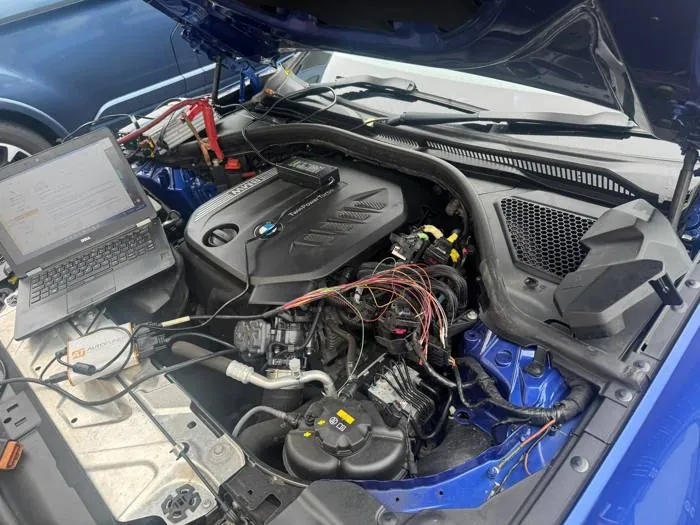
stage 2 remap by CML Autoworx, Motherwell

Professional Stage 2 Remapsin Motherwell & Surrounding Areas

Bring suitable supporting hardware and engine calibration into closer agreement, with a clear conversation about compatibility before further changes are planned.

Get my quote

10 years' experience · 30-day money-back guarantee

10 YEARS

industry experience

30 DAYS

money-back guarantee

FROM £150

clear price up front

Mobile

we come to you

The service

Calibration for a modified vehicle, not just a stage badge

Stage 2 generally describes calibration intended for a vehicle with supporting hardware changes. There is no single universal Stage 2 specification. What matters is the exact combination of engine, transmission, components, software and intended use. Buying parts because they appear on somebody else’s list is not a reliable way to establish what your vehicle needs.

CML Autoworx Ltd offers map files custom-written for the vehicle and loaded with fully licensed tuning tools. Owner Nicky Lambert has 10 years’ industry experience. Start with a full description of the vehicle and modifications so the discussion can focus on compatibility, condition and a realistic objective rather than an unsupported output target.

The business is mainly mobile across Lanarkshire, Glasgow and parts of Edinburgh, with appointments at suitable customer homes or workplaces. A workshop is also available at Park Road, Motherwell, ML1 4UH. Stage 2 enquiries need particular attention to programming access and the work involved; a mobile appointment is not automatically appropriate for every modified vehicle.

Remaps start from £150, varying by vehicle, requirements and location. That starting price is not a promise for a complete modification project or hardware supply. CML Autoworx holds motor trade and public liability insurance and offers a 30-day money-back guarantee. Call 07710 135604 to discuss the actual scope before committing to parts or booking time away from work.
If it's left

When hardware changes need a more careful conversation

A modified vehicle can introduce questions that a stage label cannot answer. These situations are reasons to clarify the combination, not reasons to keep adding parts until a problem disappears.

Parts were fitted without a calibration plan

Hardware can change airflow, temperature behaviour or the demands placed on engine management. Whether calibration changes are appropriate depends on the component and vehicle. Provide exact part details and installation history rather than assuming every upgraded component automatically requires the same software response.

The vehicle already has unknown software

A previous owner may have described a car as tuned without providing useful records. Explain what is known and what remains uncertain. Applying another stage label does not resolve unknown calibration history or establish whether the installed hardware is compatible.

You want more than standard hardware allows

Further performance may require supporting changes, but the requirements vary between engines and transmissions. Discuss your objective before purchasing components. Some requests may be unsuitable or impractical, and a sensible recommendation may be to revise the goal rather than escalate the specification.

Road use and modifications overlap

Not every component marketed for performance use is appropriate or lawful for a road vehicle. Roadworthiness, emissions requirements and insurer disclosure need attention. A Stage 2 description does not provide an exemption from legal duties or confirm that a vehicle will pass an MOT.

Common mistakes

  • Buying a complete parts list copied from another model can overlook engine variants, transmission differences and local legal requirements. Confirm compatibility and intended use before spending money on supporting hardware.
  • Assuming Stage 2 requires emissions equipment removal is incorrect. Do not treat a stage label as permission to disable required equipment or make a road vehicle non-compliant.
  • Chasing a power figure without considering heat, clutch capacity or fuel requirements creates an incomplete plan. Ask how the proposed combination suits sustained use, not just a brief acceleration run.
  • Leaving the insurer unaware of hardware changes and software modifications risks problems with cover. Describe the full modification package and check acceptance before proceeding, including any later changes to the specification.

Our process

How the job runs

  1. 1

    Document the current specification

    List the engine, gearbox, fitted components, previous tuning and known faults. Include available part information rather than broad descriptions such as upgraded intake. Tell Nicky how the vehicle is used and whether it is intended for road use.

  2. 2

    Discuss compatibility and condition

    Review the proposed objective against the installed hardware and the vehicle’s condition. Resolve uncertainties about parts and installation before assuming calibration is the answer. Any legal or insurance questions should be checked before authorising a road-vehicle modification.

  3. 3

    Agree a defined scope

    Confirm which work is being quoted, the appointment location and the preparation required. Ask whether hardware work is included rather than assuming it is. The price and timing should reflect the actual vehicle and requirements, not the stage name alone.

  4. 4

    Apply the agreed custom calibration

    A map file is custom-written for the vehicle and loaded with fully licensed tuning tools. The programming approach depends on the control unit. Any new concern about the vehicle or specification should be discussed rather than treated as a reason to press on regardless.

  5. 5

    Keep a record of the finished specification

    Retain details of the agreed work and update your insurer as required. Discuss fuel suitability, maintenance and any concerns about operation. Further hardware changes can affect the combination, so seek advice before assuming an existing calibration remains appropriate after another modification.

What you get

The benefits

Response matched to supporting hardware

Where the combination is suitable, calibration can help the engine use the fitted supporting components coherently. Faster response or acceleration may be possible, but no particular output or performance result can be promised without a vehicle-specific basis.

Compatibility before additional load

Considering hardware and operating limits together helps avoid a parts-first approach that ignores safety. Braking, tyres and road conditions still govern safe use, and engine tuning does not certify the rest of a modified vehicle.

Heat and wear kept in the discussion

Planning around condition and intended use makes durability part of the decision. More performance can increase thermal and mechanical demands, so component life cannot be guaranteed and maintenance should not be relaxed after tuning.

Avoiding unnecessary purchases

Discussing the specification before buying parts may prevent expenditure on components that do not suit the objective. This is a planning benefit, not a guaranteed saving or a promise that existing hardware will support every requested outcome.

Fewer assumptions about the setup

A clear account of hardware, software history and symptoms helps separate calibration questions from installation faults. A custom file is not a substitute for fixing leaks, damaged components or other mechanical issues affecting reliability.

A clearer basis for approval

Defined scope, an agreed price and the 30-day money-back guarantee make the decision easier to assess. Check the guarantee terms and remember that business insurance does not replace your own responsibility to insure and maintain a modified vehicle.

In detail

Making sense of a Stage 2 specification

The useful work starts with understanding the whole vehicle. These considerations help distinguish a coherent modification plan from a collection of components and a stage name.

Hardware requirements vary by engine

Supporting changes may relate to airflow, charge-air cooling or other engine-specific constraints. There is no responsible universal shopping list. A component that suits one engine may be unnecessary or unsuitable on another, even when both vehicles are described as Stage 2.

Provide part details before booking and explain any fitting issues or subsequent symptoms. Do not assume CML Autoworx supplies or installs particular components as part of a remap quote. Confirm the precise service offered and any work that must be completed elsewhere first.

Calibration and fuel need to agree

Engine management must work with the vehicle’s actual configuration and the fuel appropriate to the agreed setup. For some petrol applications, fuel grade can be a material consideration. Ask what is required rather than changing fuel on the basis of a general tuning claim.

Extra performance may also increase fuel use when it is used. A Stage 2 discussion should not be framed as a guaranteed economy upgrade. For a daily driver, be honest about running-cost priorities so the proposed approach is not at odds with the reason you use the vehicle.

Road cars and legal responsibilities

A modified vehicle used on public roads must still comply with applicable roadworthiness and emissions requirements. An MOT outcome is not a blanket approval of every modification. Check the implications of planned components before buying or fitting them, particularly where emissions systems are involved.

Tell your insurer about hardware and software changes, and check any finance, lease or warranty conditions. A component sold for competition use should not be assumed suitable for the road. If the legal position is uncertain, resolve that uncertainty before authorising the modification.

Different vehicle types and working patterns

A performance-focused car and a loaded commercial van have different operating priorities. Vans, 4x4s and motorhomes can be discussed, but a Stage 2 label is not necessarily the best answer for a working or touring vehicle. Explain loads, routes and the time spent under sustained demand.

Private owners may accept a different balance of running costs and performance from a business using a vehicle daily. Commercial decisions should consider driver consistency, maintenance planning and ownership permissions. Additional engine output does not change legal payload, towing capacity or the suitability of the vehicle for a particular job.

FAQ

Stage 2 Remap questions

How much does a Stage 2 remap cost?

Remaps start from £150, but Stage 2 pricing depends on the vehicle, requirements and location. Do not treat that starting price as a complete hardware-and-software package. Confirm exactly what is included and any separate preparation. Payment is accepted by cash, card or bank transfer.

How long will the work take?

Timing depends on the control unit, specification and agreed scope. Hardware preparation or unresolved issues may affect what can be booked. Ask for an estimate after providing accurate details rather than assuming a Stage 2 appointment takes the same time as a standard-hardware remap.

What information is needed before you start?

Provide the make, model, engine, gearbox, fitted parts, previous tuning information and known symptoms. Explain the intended use and your objective. Every map file is custom-written for the vehicle, so an accurate specification is more useful than simply saying the vehicle has Stage 2 parts.

Does the 30-day guarantee apply?

CML Autoworx offers a 30-day money-back guarantee. Confirm the terms for the agreed work before booking, particularly where separate hardware or preparation is involved. Do not assume it covers third-party components, unrelated faults or other costs unless that has been explicitly confirmed.

Will Stage 2 reduce component lifespan?

Higher loads and temperatures can affect wear, and supporting hardware does not eliminate that possibility. The outcome depends on condition, calibration, use and maintenance. No engine or gearbox lifespan can be promised. If durability is your main concern, discuss whether a less demanding approach better suits the vehicle.

Can you fit me in immediately?

Call 07710 135604 to check the earliest appointment. Same-day or emergency availability is not confirmed. A modified vehicle may need additional discussion before a slot is appropriate, so send or describe the specification rather than relying on a last-minute booking without preparation.

Where can I book near Motherwell?

The workshop is at Park Road, Motherwell, ML1 4UH. The main mobile area includes Lanarkshire, Glasgow and parts of Edinburgh, subject to the vehicle and work. Ask about Wishaw, Bellshill, Coatbridge, Hamilton, Airdrie, Lanark, East Kilbride or Uddingston when discussing your location.

Does Stage 2 mean removing emissions equipment?

No. Stage names are not standardised specifications and do not require a particular emissions modification. A road vehicle must remain compliant with applicable requirements. Discuss the intended setup and check the legality of any proposed hardware before proceeding; a performance label does not override those obligations.

Talk through the specification before buying more parts

Call Nicky on 07710 135604 with the vehicle details, fitted hardware and your intended use. Establish what can reasonably be considered, what preparation is needed and what the proposed work will cost before taking the next step.

Fully insured · Licensed tools · 30-day money-back guarantee